Road construction safety is one of the most important parts of every infrastructure project. It protects workers, drivers, and the general public. When safety plans are ignored, even a small mistake can lead to serious injuries or accidents. This guide explains how road construction safety works, why it matters, and what practices keep people safe in active work zones. From traffic control and warning signs to worker training and teamwork, every topic below is built around one goal preventing accidents before they happen.
Understanding Road Construction Safety
Road construction safety means keeping both workers and the public protected during construction, repair, or maintenance on roads. These sites often have moving vehicles, heavy machinery, and limited space. That makes safety the top priority. When work zones are well-planned and clearly marked, everyone knows where to drive, walk, and work safely.
Every year, thousands of accidents occur near work zones because of speed, distraction, or unclear warning signs. Good planning can prevent most of these. Barriers, cones, flaggers, and signs help control traffic and guide drivers smoothly through construction zones. Clear communication between the road crew and drivers keeps both sides safe.
Safety doesn’t just protect lives it keeps projects on schedule and builds trust between construction teams and communities.
Why Safety Matters in Road Construction Projects
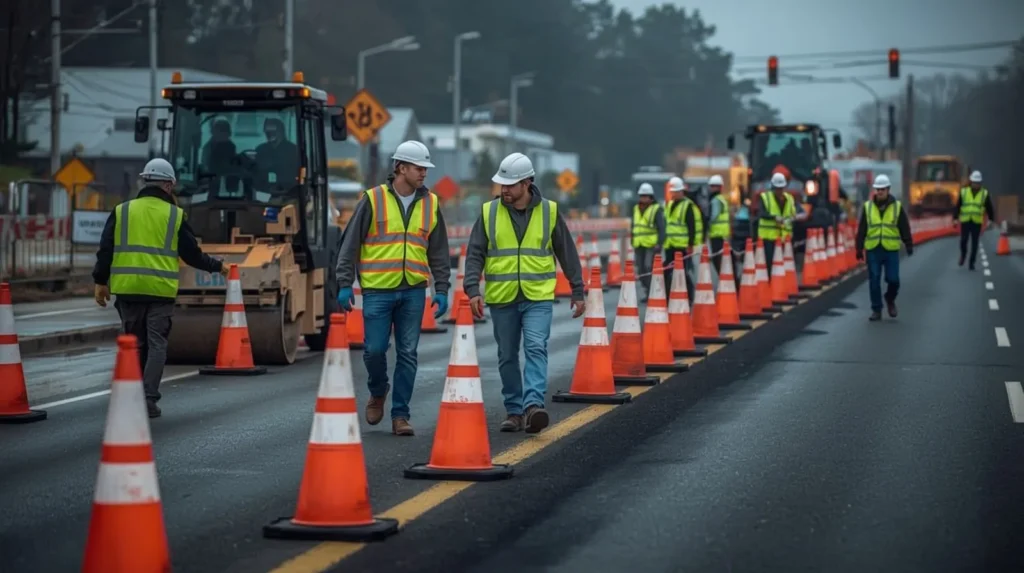
Safety in road projects matters because the work environment is unpredictable. Workers stand only a few feet from traffic, often under poor weather or low light. Without protection, one small error can cause injury or worse.
Proper safety planning helps reduce risk, improves worker focus, and supports long-term efficiency. When crews follow safety guidelines, fewer incidents occur, meaning less downtime and lower costs. Beyond that, visible safety practices reassure the public that the company values lives and responsibility over shortcuts.
Safety also supports compliance with local and federal laws. Agencies expect every contractor to follow clear standards for work zone safety, signage, and traffic control. Companies that do so earn a reputation for professionalism and reliability something KW Asphalt takes seriously in every project.
Common Risks Faced in Construction Work Zones
Work zones are full of hazards that require careful control. The most common include:
- Traffic Movement: Cars passing too close to workers, especially when drivers are distracted or speeding.
- Heavy Machinery: Cranes, rollers, and pavers can injure workers if visibility or communication fails.
- Uneven Surfaces: Gravel, holes, or fresh asphalt can cause slips or falls.
- Weather Conditions: Rain or fog reduces visibility for drivers and workers.
- Night Work: Low lighting increases accident risks if safety lights or reflective gear are missing.
Understanding these risks helps project managers develop a plan before construction starts. It also helps workers stay aware of what could go wrong and take action quickly when needed.
Work Zone Safety Practices Every Crew Should Follow

Work zone safety isn’t just about tools and signs it’s about habits. Here are simple but effective practices every crew should use daily:
- Wear proper protective gear: Hard hats, reflective vests, boots, gloves, and safety glasses protect workers from flying debris and traffic.
- Follow work zone layout plans: Everyone must know where equipment, entry points, and safe zones are located.
- Use barriers and cones correctly: Keep clear separation between vehicles and workers.
- Inspect the area daily: Check for damaged cones, broken signs, or blocked pathways.
- Keep communication open: Radios and hand signals prevent confusion when machines are running.
These small habits add up to strong protection. A safe work zone becomes a disciplined workplace where accidents are rare and everyone looks out for each other.
Road Construction Traffic Safety and Control Measures
Traffic control is at the heart of road construction traffic safety. Managing vehicles safely around a work zone keeps both drivers and workers protected.
Key measures include:
- Flaggers and Traffic Controllers: They guide vehicles safely through narrow lanes.
- Cones, Barricades, and Channelizers: These create visible boundaries.
- Advance Warning Signs: Signs alert drivers before they reach the work zone.
- Reduced Speed Limits: Temporary speed signs remind drivers to slow down.
- Portable Traffic Lights or Arrow Boards: These guide traffic when lanes are closed.
The main goal is to safely control the traffic flow and protect everyone on the site. When used correctly, these methods prevent crashes and confusion especially during rush hours.
Importance of Work Zone Signs in Preventing Accidents
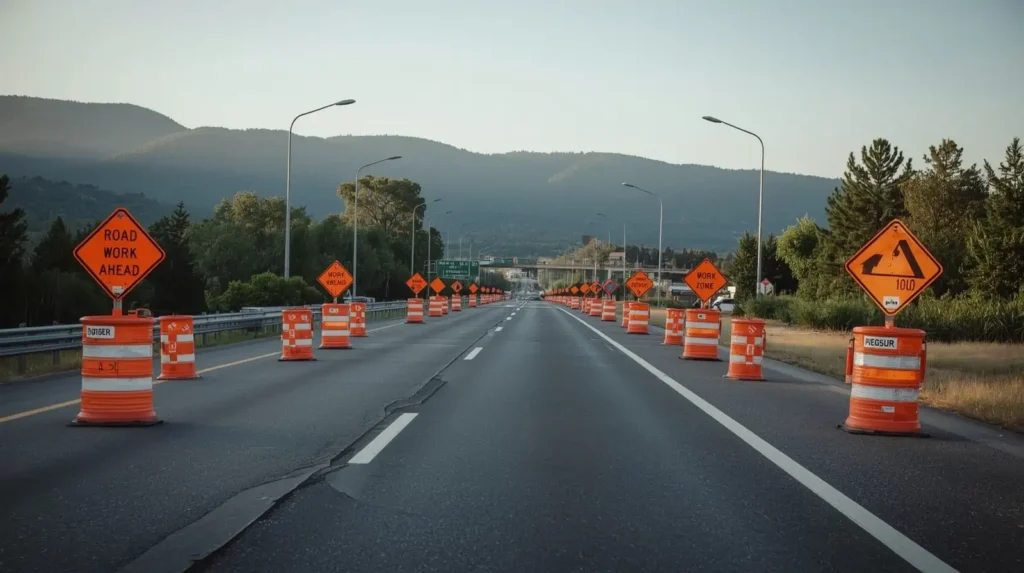
Work zone signs are more than bright orange boards. They communicate with drivers who may be unfamiliar with the area. Good signage should be clear, visible from a distance, and placed early enough for drivers to react.
Typical signs include messages such as “Road Work Ahead,” “Detour,” or “Flagger Ahead.” Reflective materials make them visible at night, and symbols help non-English readers understand instantly.
According to experts, work zone signs usually have standardized colors orange for warning, black letters for instructions, and clear shapes for quick recognition. Proper sign placement saves lives by preventing sudden stops or lane changes near active crews.
Road Worker Safety and On-Site Communication
A safe work zone depends on teamwork. Road worker safety starts with training and continues with daily cooperation. Workers need to understand how to communicate clearly with each other, especially when heavy equipment is moving.
Two-way radios, hand signals, and eye contact are simple but powerful tools. Supervisors should check that every worker knows emergency procedures, signal meanings, and exit routes. Signs marking “workers on site” help remind drivers that people are close to the road.
Regular safety meetings keep everyone alert. The more informed the crew is, the less likely mistakes will happen. KW Asphalt emphasizes this approach by ensuring each worker knows their exact role before every shift.
Highway Construction Safety and Urban Work Challenges
Highway and city construction sites face very different safety issues. Highway construction safety focuses on high-speed traffic and long distances. Workers may need more barriers and lighting because vehicles move faster and have less time to react.
In contrast, urban areas have tighter spaces, pedestrians, and more intersections. In urban areas, construction work is likely to occur next to homes, schools, or offices, so signs and detours must be clear and respectful of residents. Noise and dust control also become part of the safety plan.
Both highway and urban projects share one rule the work zone must stay organized and visible at all times.
Environmental and Site Conditions Affecting Safety
Every job site has unique environmental conditions. Rain, snow, heat, and darkness affect visibility, traction, and worker performance.
If a site is near trees or uneven ground, soil erosion or loose debris can cause instability. Strong wind can even blow over cones or barriers.
Lighting is another factor too little light increases danger, while glare from oncoming vehicles can blind workers.
Managers should evaluate these risks daily. A construction work site that adapts to changing conditions is always safer than one that doesn’t. Using weather apps, ground sensors, and light towers helps maintain a secure environment even during long night shifts.
Training and Safety Meetings at the Construction Work Site
No safety rule matters unless workers understand it. Regular training sessions teach everyone how to handle tools, read signs, and recognize danger zones.
Safety meetings reinforce good behavior and share updates about new risks.
Topics often include:
- How to handle emergency situations
- Proper use of safety gear
- Understanding traffic control signals
- Identifying unsafe actions before accidents happen
These meetings build confidence. Workers become more aware, respond faster, and take pride in keeping their site safe. A trained team means fewer errors, smoother workflow, and better results for every project.
KW Asphalt’s Commitment to Road Construction Safety in Greenville, SC
At KW Asphalt, safety isn’t a checklist it’s a promise. The company believes that every road, highway, and parking lot can be built safely when proper planning, training, and respect for people are in place. Each project follows strict safety standards, using updated traffic control tools and modern work zone layouts.
The team’s focus on road worker protection, clear communication, and reliable equipment ensures both quality and safety. From flaggers to project managers, everyone shares the same goal: send every worker home safely each day.
That’s what sets KW Asphalt apart a company that treats safety as the foundation of success, not an afterthought
If you’re planning a paving or road construction project and want a team that values safety, professionalism, and precision, reach out to KW Asphalt today. Your project deserves careful hands and a trusted local team ready to deliver reliable results every time.